
XERF™ Has Arrived: The Next Generation of Skin Tightening
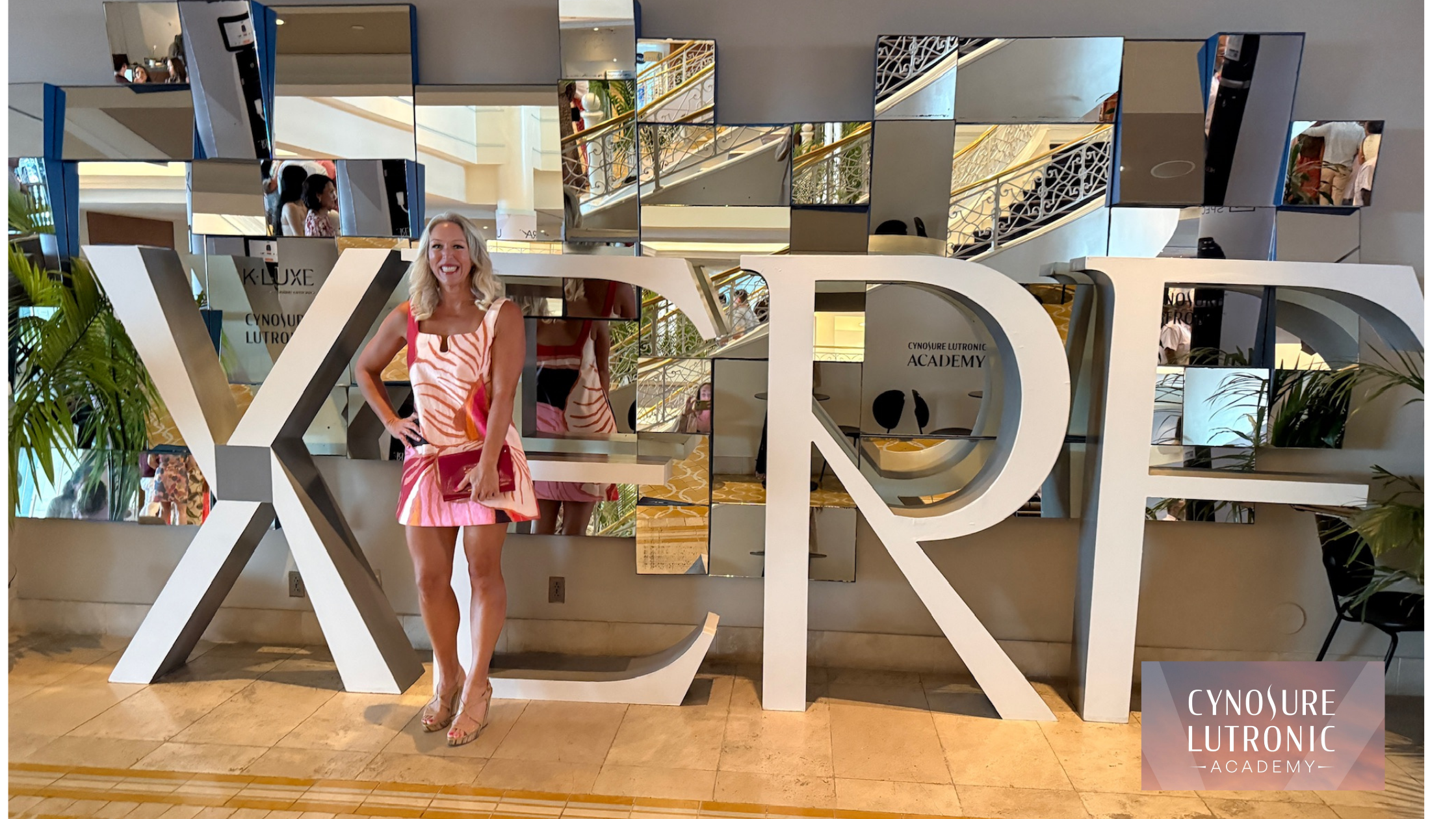
We just got back from San Diego—and we came home even more excited about what XERF™ Structural Skin Tightening means for the future of HollaceMD Advanced Laser + Aesthetics.
This weekend, the Cynosure Lutronic Academy brought together aesthetic physicians and providers from around the country for advanced education, hands-on training, and the latest clinical insights surrounding XERF.
After an incredible weekend learning from physicians who are using XERF in their practices and exploring new ways to customize the technology, we came home with an even deeper understanding of what makes this treatment different.
XERF isn't simply another skin-tightening device. It represents a new approach to non-invasive tissue remodeling.
Why Is Everyone Talking About XERF?
Since its launch, XERF has quickly gained attention in the aesthetics industry, with more than 2,000 systems installed worldwide, according to Cynosure Lutronic.
And we understand why.
XERF combines multifrequency RF energy, customizable treatment depths, and an exceptionally comfortable treatment experience—all without needles or required downtime.
The technology uses two RF frequencies—6.78 MHz and 2 MHz—designed to deliver energy at different tissue depths. With three treatment depths and ten energy levels, treatments can be customized to the individual patient rather than taking a one-size-fits-all approach.
For us, that level of customization is one of the most exciting aspects of XERF.
Think Beyond the Surface
The name says it all: Structural Skin Tightening.
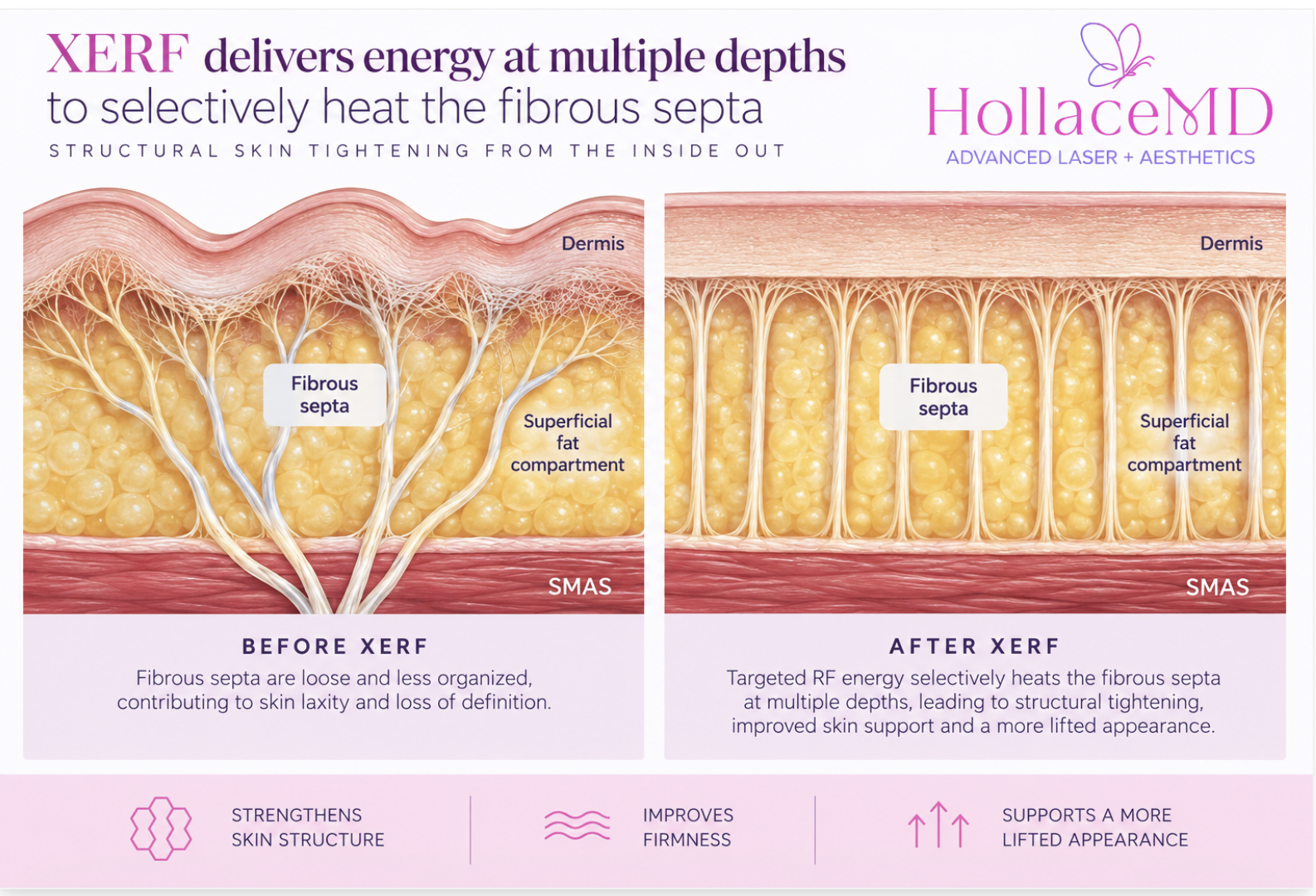
XERF is designed to deliver controlled RF energy across multiple tissue levels, including deeper structures that contribute to facial support.
The goal is controlled heating that encourages collagen contraction and remodeling, helping the skin become firmer and more supported over time.
Heat → collagen contraction → remodeling → progressive improvement.
And because collagen remodeling is a process, results can continue to develop following treatment.
Powerful Technology. Comfortable Treatment.
One of the things that stood out to us most about XERF is the patient experience.
The treatment is:
Needle-free
Numbing-free
Non-surgical
No required downtime
XERF incorporates Wave Fit™ pulse technology, integrated cooling, real-time temperature monitoring, and impedance feedback to help control energy delivery and support patient comfort.
For someone who wants to address skin laxity without surgery or significant recovery time, that's a compelling combination.
What Are Patients and Providers Seeing?
The early clinical data are encouraging.
In a prospective multicenter study published in Cureus in 2026, 39 patients across four clinical sites received two dual-frequency RF treatments four weeks apart. At 90 days, 92.3% of participants achieved a clinician-rated Global Aesthetic Improvement Scale (GAIS) score of 3 or higher, while 84.6% met the study's predefined patient-satisfaction threshold. No long-lasting adverse events were reported during the study period.
These findings provide encouraging early clinical evidence for XERF's approach to facial laxity and lower-face lifting. Like any emerging technology, however, the research is still developing. This was a relatively small study without a control group, and follow-up was limited to 90 days—so additional research will be important to understand longer-term outcomes.
We appreciate that kind of ongoing research because, at HollaceMD, we believe excitement about new technology should always be balanced with good science.
Providers using XERF are also reporting strong patient interest and visible changes in skin firmness and definition.
For us, that's an exciting combination:
Advanced technology. A comfortable patient experience. And growing clinical evidence.
A Different Approach to Aging
At HollaceMD, we believe aesthetics should be about helping you look like your best, most refreshed self—not changing who you are.
That means supporting collagen, maintaining skin quality, and addressing changes in firmness and structure before they become more pronounced.
XERF may be used to address concerns including:
Loss of firmness
Early skin laxity
Jowling
Changes in facial definition
Fine lines and wrinkles
Overall skin tightening
The goal isn't to make you look different.
It's to help you look refreshed, tighter, and naturally rejuvenated.
Why XERF at HollaceMD?
We don't invest in a technology simply because it's new.
Before bringing a treatment into our practice, we consider the science, clinical applications, patient experience, and—most importantly—whether we believe it can genuinely benefit our patients.
That's what led us to XERF.
And that's why continuing education is so important to us.
Our weekend at the Cynosure Lutronic Academy gave us the opportunity to learn directly from physicians using XERF, explore advanced treatment approaches, and deepen our understanding of how to customize the technology for individual patients.
We didn't just bring XERF to Charlotte. We brought back a deeper level of expertise in how to use it.
We're also proud to be one of only six XERF practices in North Carolina.
What We Came Home Saying
Our biggest takeaway from the Academy?
The future of aesthetics is becoming more sophisticated, more personalized, and more natural-looking.
XERF brings together advanced RF technology, customizable treatment, and a patient experience designed to fit into real life.
And now, that technology is available right here at HollaceMD Advanced Laser + Aesthetics in Charlotte.
Ready to Experience XERF™?
If you're noticing changes in firmness, facial definition, or skin laxity—or you're interested in being proactive about collagen and skin aging—we'd love to talk with you about whether XERF is right for you.
XERF™ Structural Skin Tightening is now available at HollaceMD.
Book Your XERF Consultation
Clinical Reference
Weiss RA, Wang J, DiBernardo B, Bhatia AC. Clinical Outcomes Following Dual-Frequency Noninvasive Monopolar Radiofrequency Treatment for Facial Laxity and Lower Face Lifting: A Prospective Multicenter Study. Cureus. 2026. Read the study on PubMed